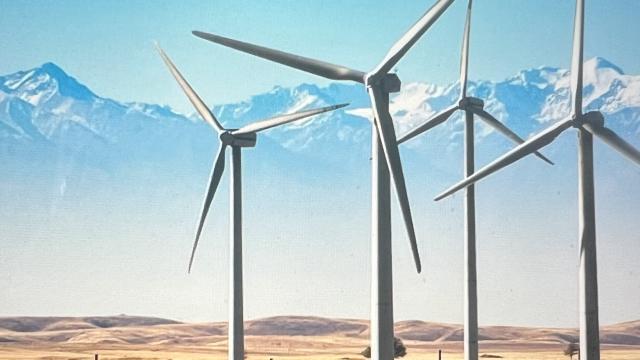
Following the collapse of the Soviet Union in 1991, the Central Asian (CA) republics of Kazakhstan, Kyrgyzstan, Tajikistan, Turkmenistan and Uzbekistan found themselves in a power vacuum, economically underdeveloped, needing to establish their individual sovereignties, identities, and their political, economic, and foreign policy futures. The European Union (EU) offered all five support and development opportunities using a constructivist approach to assisting these Soviet Socialist Republics. Over a 30 year period this has been maintained, despite the variability of the states’ responses to its normative agenda. While other actors and agencies are variously engaged in CA’s energy transition, it is the EU that has been an outstanding and constant supporter.
My thesis explains the EU’s willingness to provide support to the authoritarian-governed countries where decision-making is vested in elites and high-level decision[1]makers, and where significant gaps in policy, planning and institutional capacities have restricted the states’ capability to take deliberate, evidence based steps to ensure the critical role that energy supply stability and security plays in economic development.
With the region is already subject to climate change engendered insecurities, the thesis investigates progress made thus far and identifies the challenges in achieving sustainable clean energy goals.
In the context of the EU’s expertise and experience in climate change action and the development and deployment of renewable energy, its untied financial aid is on offer. The thesis demonstrates the variability five states to introduce energy efficiency measures and to transition to clean energy, using Kazakhstan and Kyrgyzstan’s energy transitions for comparative purposes.
Location
Speakers
- Margaret Norington
Contact
- CAIS Administrator0261258029
File attachments
| Attachment | Size |
|---|---|
| 2025.11.21-Final-Oral-Presentation.pdf(427 KB) | 427 KB |